Your Wedding Flowers Checklist: What to Plan From the First Call to the Wedding Day
Most couples start with the bouquet, then the list grows fast. Here is everything a wedding actually requires, flower-wise, in the order you should decide it.

Many couples start flower planning with one item on the list. The bouquet. Then the first call with a florist happens, and the list grows fast.
That part is normal, and it is fixable with a little structure. This checklist walks you through everything a wedding actually requires, flower-wise, in the order you should decide it.
Start With the Three Categories
Every wedding flower order breaks down into three groups. Once you see them, the whole project gets easier to manage.
Personals. These are the flowers people wear or carry:
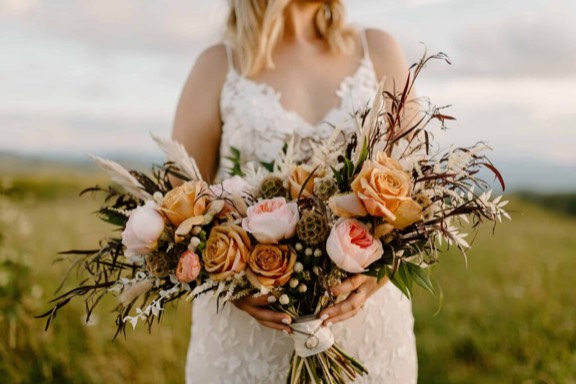
- Bridal bouquet and bridesmaid bouquets
- Boutonnieres for the groom, groomsmen, and other family and wedding party members
- Corsages or small bouquets for moms and grandmothers
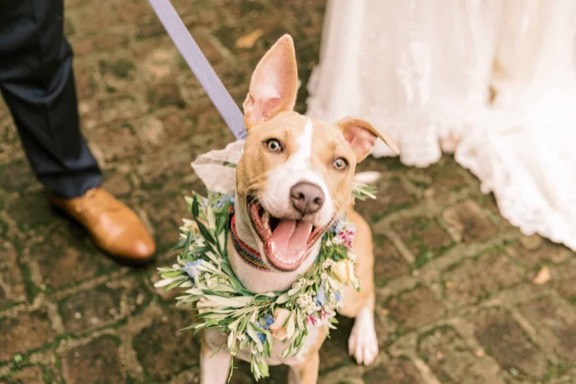
- Something for the flower girl, which can be a basket or a flower crown
Make the list by asking directly. Sit down with your partner, go through the family and wedding party name by name, and write down who gets what. Guessing creates last-minute scrambles.
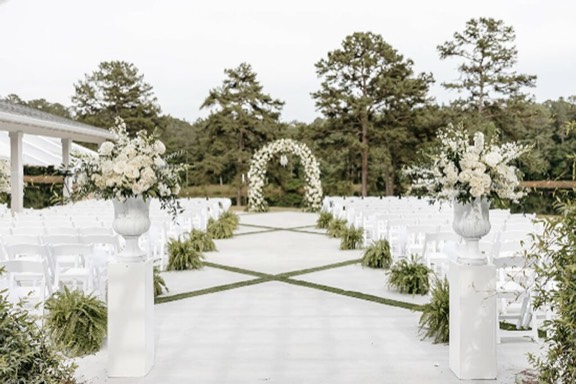
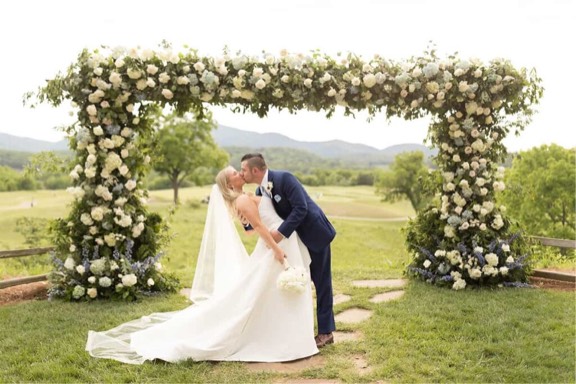
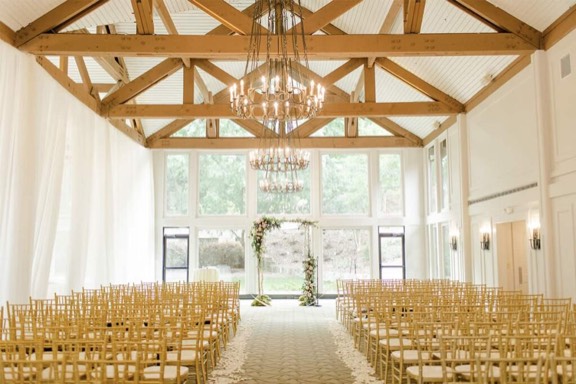
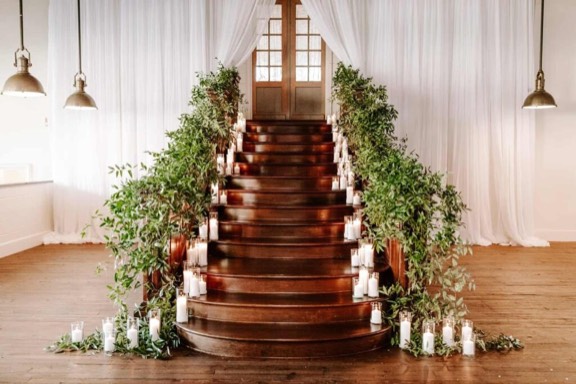
Ceremony flowers. Some couples want a big floral moment, like a lush arch. Others prefer large arrangements that sit at the altar during the service. Add aisle flowers if you want them.
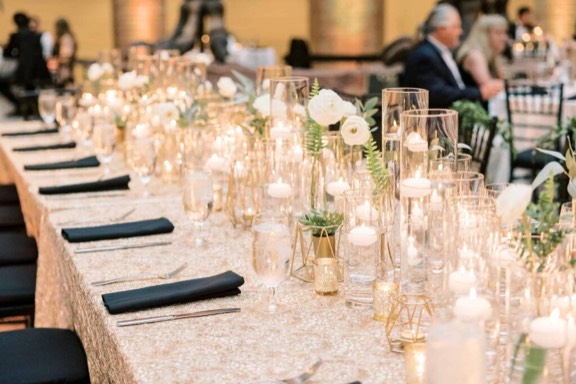
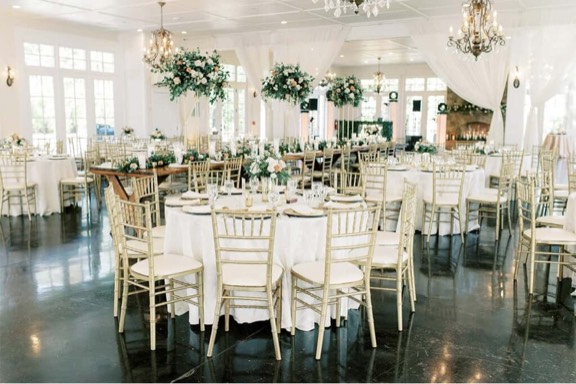
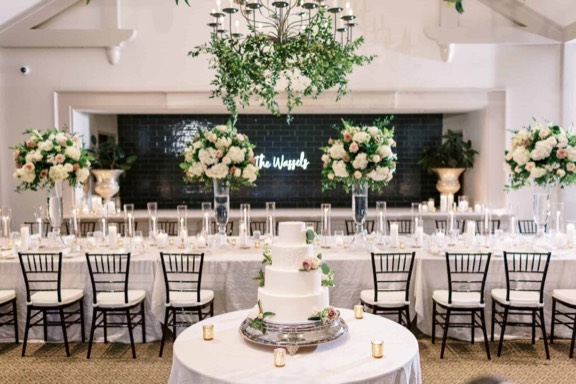
Reception flowers. This is about atmosphere. Think in layers: candlelight, some low florals, some tall florals, and bud vases to fill in. The goal is a clear vision for how you want the room to feel when guests walk in.
Plan for the Spots Everyone Forgets
This is commonly overlooked. Couples plan the big moments and skip the small surfaces guests actually interact with up close.
Add these to your checklist now:
- The welcome table. It is literally the first thing guests see.
- The bar. Guests gather there all evening.
- Any other accent spots your venue has, like a cake table or guest book station.
These pieces are small, and they shape the whole first impression of your reception.
Let Your Flowers Do Double Duty
Here is the smartest money move in flower planning. Repurpose.
Aisle flowers can move to the reception and become centerpieces. Bridesmaid bouquets can land in vases on the head table. Ceremony arrangements can shift to the reception space while guests are at cocktail hour.
Ceremonies are short, often around half an hour, and many florists repurpose ceremony flowers into the reception. One investment serves two spaces.
Talk to your florist about this early. Repurposing requires planning around vessel, arrangement size, and transition time, so it works best when it is built into the design from the start.
Be Careful With AI Inspiration Photos
This is the biggest mistake we see right now. Couples arrive with AI-generated images showing arrangements at a size and scope their budget cannot cover, or flowers that do not exist at all.
At Blosm, we see AI-generated designs set unrealistic expectations, from budget to design. The images can show flowers that do not exist and arrangements that could never be built.
A good florist handles this through education. They can show you real photos of what is possible within your budget, so the fantasy can be replaced with something real and beautiful you can actually have.
You can help yourself here, too. Do your research. Check out a florist's website and social media and look at their actual work before your first call. Real portfolios tell you what a florist can deliver. AI images tell you what an algorithm imagined.
Book in the Right Order
Flowers come earlier in the planning sequence than many couples expect. The order looks like this:
- Set your date.
- Book your venue. The venue dictates what your florist can and cannot do logistically, so it has to come first.
- Secure your florist. Right after the venue.
Timing matters because of peak season. Spring and fall dates get booked well in advance. Industry guidance recommends booking your florist 6 to 12 months out, with September and October being especially competitive. Couples who wait too long may find their florist already booked and may lose the flowers they wanted.
The good news is that booking early buys you time. If your wedding is far out, you and your florist can refine your vision and color palette together over the months that follow. The big decision is who, and it comes first. The details can breathe.
Know Your One-Month Deadline
Here is a hard cutoff worth knowing about. At Blosm, flowers are ordered about a month before the event, and other florists may order earlier, so ask yours for their date.
Before that order goes in, lock these down:
- Final table count. Table count directly drives the centerpiece order.
- Final bridal party numbers. A last-minute addition to the party means another bouquet or boutonniere, and the flowers for it may already be ordered.
- Flower choices that depend on sourcing. Out-of-season blooms like peonies may not be available if you add them late.
Treat your headcount and table count as flower decisions, because they are. When they change late, the floral plan changes with them.
Your Checklist at a Glance
Pull it all together and the path from first call to wedding day looks like this:
- Set your date and book your venue.
- Research florists by looking at their real work online.
- Secure your florist, 9 to 12 months out for peak dates.
- Build your personals list name by name.
- Choose your ceremony moment, arch or altar arrangements.
- Design the reception in layers of height, candlelight, and texture.
- Add the welcome table, the bar, and other accent spots.
- Plan which pieces get repurposed from ceremony to reception.
- Replace any AI inspiration with real photos within your budget.
- Finalize table counts and bridal party numbers before your florist's order deadline.
Wedding flowers reward early, realistic planning. Give yourself a real timeline, work with a florist whose actual portfolio you love, and let their experience turn your vision into something your season, venue, and budget can truly deliver.